Dining Etiquette Series – The Appetizer Course 2

Civilization has taught us to eat with a fork,
but even now if nobody is around we use our fingers.
~ Will Rogers (1879-1935)

The late great Will Rogers would no doubt have appreciated an appetizer served as a formal, or informal, dinner course that he could have eaten with his fingers!

Following are three favorites that are commonly served as an appetizer course, along with information on how you can expect them to be served.

Dining Etiquette Series – The Appetizer Course 1


“…since people still needed them shrimps for shrimp cocktails…”
~Forrest Gump, in Forrest Gump 

“These are Escargot. It’s French for snails. It’s a delicacy. Try it.”
~ Edward to Vivian, as their appetizers were served
during the dinner scene in the movie, Pretty Woman

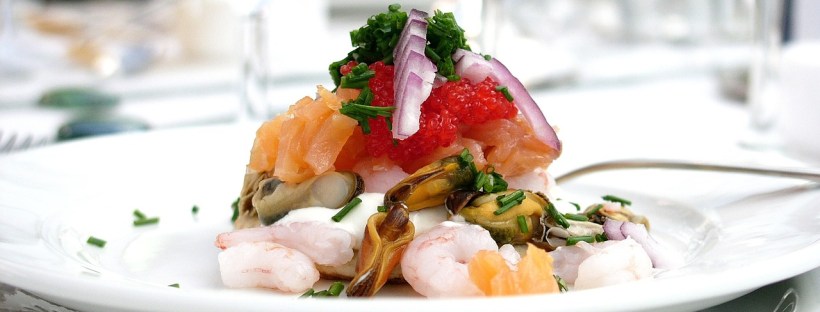
Whether you’re dining on a spectacular shrimp cocktail like the one pictured above, or indulging in one of Edward’s favorite delicacies, Escargot, as Vivian did, or tried to (I think those who recall the scene in question know how that turned out), you will be enjoying your appetizer course. Depending upon where you are dining or the host’s preference, your appetizer will appear with either the first or second course. 

Dining Etiquette Series – That Little Place Card


“Proper names are poetry in the raw.
Like all poetry they are untranslatable.” 
~ W.H. Auden

Whatever one of the greatest poets of the 20th Century meant by these words, to most people their names are like poetry and music to their ears. And that is the reason when printing or lettering place cards, whether they are for a formal or informal affair, names must be spelled correctly. No mistakes or typos are permitted or excused. Great care must be taken when preparing these personalized accouterments to the dining table. Place cards are commonly used when there are eight or more guests. I love place cards, as they add another dimension to a formal or festive table, and people love to see their names as much as they love to hear them. 

Dining Etiquette Series – Using Your Knife and Fork

“No one's gloomy or complaining
While the flatware's entertaining…”

~ “Be Our Guest,” sung by Lumiere, from Beauty and the Beast

Lumiere is correct. Your flatware can be entertaining if you have to stop and figure out what it all means, and how to use it! But, Lumiere and I have you covered. Before you read on, you might want to review my introduction to using flatware in a previous post, under the heading, “Flatware.”   

In this entry, let’s take a look at the two main styles of using one’s knife and fork, The American style and The Continental style. The American style is so named because it is usually only Americans and perhaps some Canadians who use it, while the rest of the world uses the Continental style. And, it’s fun to speculate on the reasons for the different styles. 

Dining Etiquette Series – The Tablecloth

A good upbringing means not that you won't spill sauce on the tablecloth,
 but that you won't notice it when someone else does.
~ Anton Pavlovich Chekhov (1860–1904), Russian author, playwright

Yes, there’s even etiquette and protocol with regard to the tablecloth! According to Suzanne von Drachenfels in her book, The Art of the Table, “the tablecloth was the first decorative accessory known to the table…” 

Whether dining out, as a guest in someone’s home or when selecting a tablecloth for use in your own home, it’s helpful to know some tips about tablecloths. 

Dining Etiquette Series – Crystal Gazing

Question: What did the women of Sex And The City not know how to do
that Bogart and Bergman finally got right in Casablanca


Answer: The correct way to hold stemware! In a number of scenes throughout the series, the sophisticated ladies of Sex and the City are seen holding their wine or champagne glasses incorrectly--by the bowl instead of the stem. And, although Bogie and Bergman fumbled their goblets, as well, in Casablanca, they finally got it right in the scene where they are together for the last time in Paris. Toasting each other with champagne and holding their glasses correctly by the stems, Bogie utters one of his most famous lines: “Here’s looking at you, kid.” 

Dining Etiquette Series – The Salad Plate

"There was an Old Person of Fife,
Who was greatly disgusted with life;
They sang him a ballad,
and fed him on salad,
Which cured that Old Person of Fife."

~ Edward Lear, English artist, writer (1812-1888)

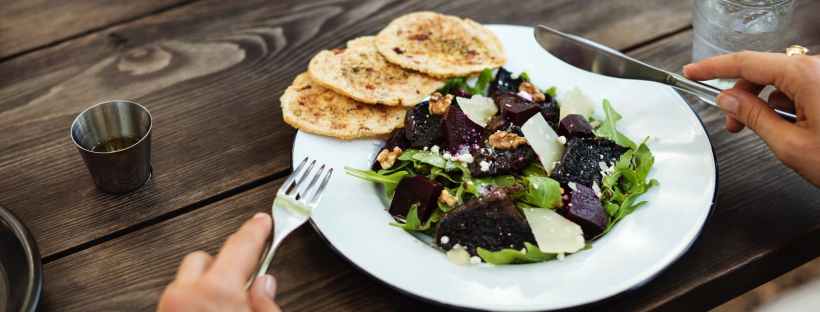
Ah, the salad course! It’s my favorite, and, as an American, I prefer to enjoy it before the main course. But, in some countries, especially in Europe, the salad course is served after the main course as a palette cleanser before the cheese course is served.

It is believed that as far back as ancient times, the Romans and Greeks dined on raw vegetables that they dressed with vinegar, oil, and herbs. And, according to the Oxford Companion to Food, the word, “salad” resulted from the progression of first the Latin word, sal, which means “salt”; later the form, salata, which means, “'salted things” referring to a primary ingredient of dressing they used; and then the Old French word, salade; and finally in 14th century emerged the English word, “salad” or sallet, as they said back then.

Dining Etiquette Series – The Bread and Butter Plate

Show That You’re Well-Bred When Breaking Bread

The formal table setting often includes the bread and butter plate, which is located at the upper left of your service or main plate, directly above your forks. However, on a crowded table this small plate might be placed wherever there is room, but always to the left. On your B&B plate will rest a butter spreader, named such because it’s used to spread butter rather than to cut bread. (See the section below, Buttering Up, regarding missing butter spreaders).

To remember that your B&B (as well as your salad) plate is placed to the left of your main plate, and glasses are placed to the right, try these methods: