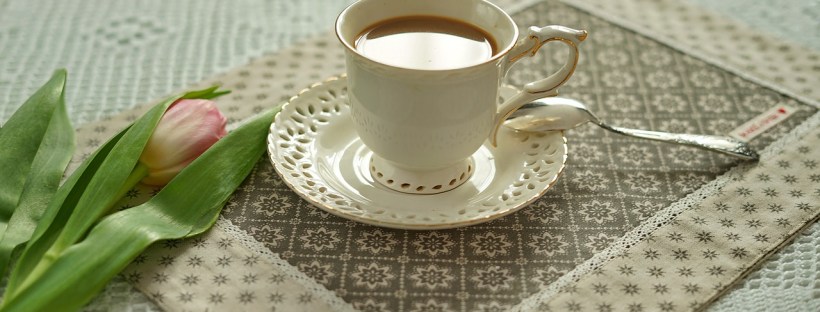
Dining Etiquette Series – The Complexities of Serving Coffee

Ah! How sweet coffee tastes!
Lovelier than a thousand kisses,
 sweeter far than muscatel wine!
 ~ Lieschen, Coffee Cantata by Johan Sebastian Bach

In the early 18th Century in Leipzig, Germany, coffee was a controversial commodity. Some years later, Bach composed Coffee Cantata about the coffee “brew”- ha-ha, which features the clash of a father and daughter over her love of the seductive beverage. (Here is the English translation.)

Today, we have some controversies of our own about coffee, or at least variations in the way we serve it in formal or semi-formal social and business luncheons and dinners.

Dining Etiquette Series – Dessert, At Last!

Life is uncertain.  Eat dessert first.
~
Ernestine Ulmer, 1892-1987

No doubt many people will agree with this famous quote. But, in the formal multi-course dinner, dessert is the last course, at least in the U.S. In European, and European-influenced, countries you might find that the dessert course is followed by a fruit course to finish the dinner with a refreshing palate cleanser, and then followed by coffee and a sweet (more about the “coffee course” next week). But, in most cases, dessert will be the sweet finale to a luncheon or dinner. 

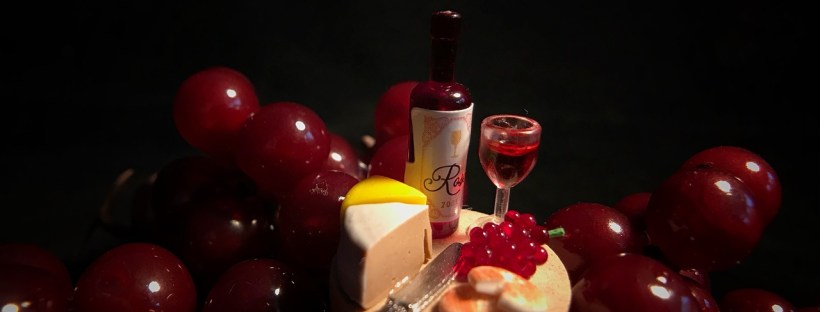
Dining Etiquette Series – Fruit & Cheese Course

"Digestive cheese, and fruit there sure will bee...”
~
Inviting a Friend to Supper
by Ben Jonson

The course that follows the main course, which I talked about in last week’s entry, sometimes consists of fruit and cheese. However, this custom varies among chefs, event planners, hosts, restaurants and countries. In some cases, the cheese might stand alone! For example, as cheese is a digestive, it might follow the main course, followed by the dessert course, which might be followed by a small serving of fresh fruit to end with something refreshing and palate cleansing. This custom, however, is rare in the U.S., where a formal meal is likely to end with dessert. 

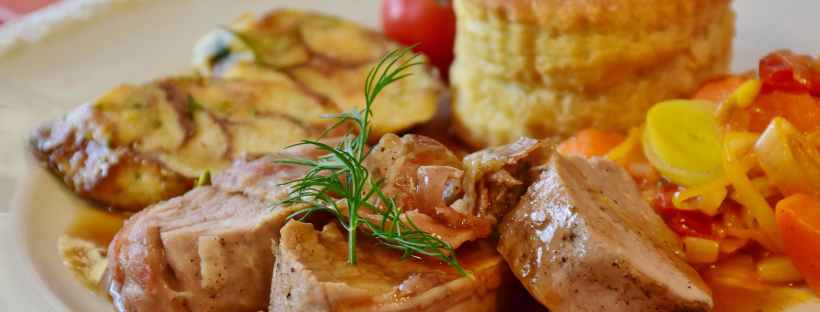
Dining Etiquette Series – The Main Course

Go vegetable heavy. Reverse the psychology of your plate by making meat the side dish and vegetables the main course. ~ Bobby Flay

Mr. Flay might have the right idea. Scientists say that by 2050 we'll all be vegetarians due to an additional two billion people crowding the planet. With less land and water to accommodate livestock, we’ll be turning to vegetables instead. And, as this will be a gradual trend toward plant food, we should be thinking now about either practicing zero population growth, a concept that took root in the late 1960s, or coming up with creative and diverse ways to prepare vegetables for both family and formal dining.

Dining Etiquette Series – Amuse-Bouche


"Hannibal, confess; what is this divine looking amuse-bouche?"

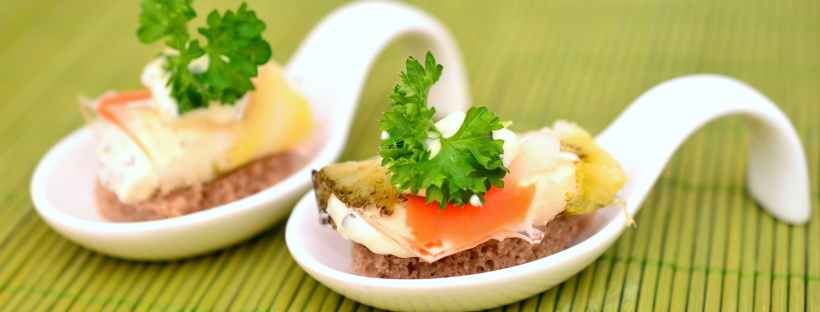
With recent references to amuse-bouche being linked to Dr. Hannibal Lecter – first with the quote above from the 2002 movie, The Red Dragon, starring Anthony Hopkins, and then as the title of Episode 2 in Hannibal, the creepy new TV series that debuted in April on NBC – one could get the wrong idea about this little delight.  But don’t worry; the amuse-bouche pictured above supposedly is all fruit and fish!

Dining Etiquette Series – The Appetizer Course 2

Civilization has taught us to eat with a fork,
but even now if nobody is around we use our fingers.
~ Will Rogers (1879-1935)

The late great Will Rogers would no doubt have appreciated an appetizer served as a formal, or informal, dinner course that he could have eaten with his fingers!

Following are three favorites that are commonly served as an appetizer course, along with information on how you can expect them to be served.

Dining Etiquette Series – The Appetizer Course 1


“…since people still needed them shrimps for shrimp cocktails…”
~Forrest Gump, in Forrest Gump 

“These are Escargot. It’s French for snails. It’s a delicacy. Try it.”
~ Edward to Vivian, as their appetizers were served
during the dinner scene in the movie, Pretty Woman

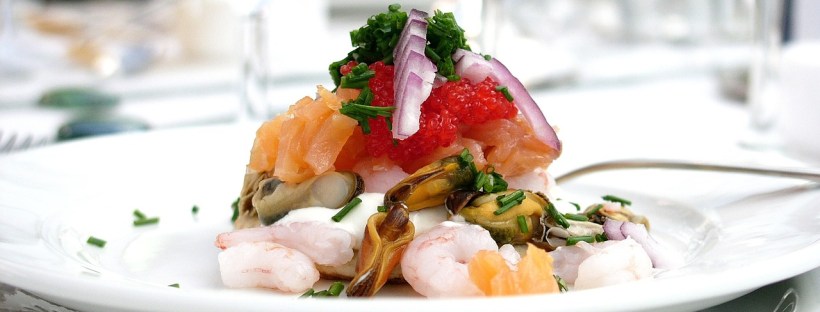
Whether you’re dining on a spectacular shrimp cocktail like the one pictured above, or indulging in one of Edward’s favorite delicacies, Escargot, as Vivian did, or tried to (I think those who recall the scene in question know how that turned out), you will be enjoying your appetizer course. Depending upon where you are dining or the host’s preference, your appetizer will appear with either the first or second course. 

National Etiquette Week 2013

“O, Times! O, Manners! It is my opinion
That you are changing sadly your dominion
I mean the reign of manners hath long ceased,
For men have none at all, or bad at least…

~ Edgar Allan Poe, Poetry, Tales and Selected Essays

If Mr. Poe was bemoaning the decline of manners in the 19th Century, perhaps there has always been an element of incivility in society. We are most certainly hearing an outcry about the widespread lack of common courtesy in the early 21st Century. However, we know now, as the learned knew back then, that those who master etiquette skills generally are more successful in their social and business lives. 

And, now there is something in which Mr. Poe most likely would have been happy to participate: National Etiquette Week (NEW), which is being observed during this week, May 13-17. 

Dining Etiquette Series – That Little Place Card


“Proper names are poetry in the raw.
Like all poetry they are untranslatable.” 
~ W.H. Auden

Whatever one of the greatest poets of the 20th Century meant by these words, to most people their names are like poetry and music to their ears. And that is the reason when printing or lettering place cards, whether they are for a formal or informal affair, names must be spelled correctly. No mistakes or typos are permitted or excused. Great care must be taken when preparing these personalized accouterments to the dining table. Place cards are commonly used when there are eight or more guests. I love place cards, as they add another dimension to a formal or festive table, and people love to see their names as much as they love to hear them.