Deck The Halls Without The Folly

Deck the halls without the folly
Fa-la-la-la-la, la-la-la-la
All the staffers must be jolly.
Fa-la-la-la-la, la-la-la-la
Thus, to get around a quarrel
Fa-la-la, la-la-la, la-la-la.
Poll the office is the moral.
Fa-la-la-la-la, la-la-la-la.
Could too many decorations
Fa-la-la-la-la, la-la-la-la
Hurt coworkers' good relations?
Fa-la-la-la-la, la-la-la-la
Please follow my etiquette advice.
Fa-la-la, la-la-la, la-la-la.
I shouldn’t have to tell you twice.
Fa-la-la-la-la, la-la-la-la
Show respect for ev’ry custom.
Fa-la-la-la-la, la-la-la-la
Christian, Jew, Hindu & Muslim
Fa-la-la-la-la, la-la-la-la
Plan the décor, all together. 
Fa-la-la, la-la-la, la-la-la.
This could be a grand bellwether.
Fa-la-la-la-la, la-la-la-la
~A Christmas Parody by Jeanne Nelson 

Come every December, or even earlier, people across America and around the world will be decorating their workplaces for the holidays. Early in my career, the offices in which I worked displayed holiday decorations solely comprised of Christmas décor, including the now widely banned crèches. As the years passed, token menorahs appeared, but they seemed lost among the ornamental trees, boughs, wreaths, garlands, and other Christmas- related garnishments.   
Women’s History Month – The Rise of the Boss Lady

But Do We Like Her?

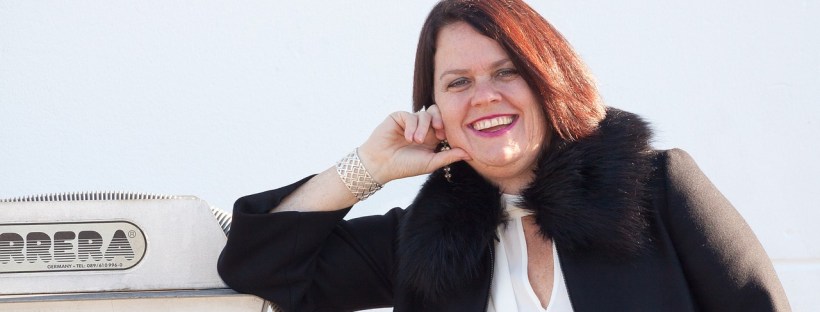
From Diana Christensen (Network, 1976) and Katharine Parker (Working Girl, 1988) to Miranda Priestly (The Devil Wears Prada, 2006) and M (James Bond, 1995-2012), the female boss has been portrayed in the movies as immoral, back-stabbing, fire-breathing and unfeeling, to the point of being unflinchingly prepared to send even her most prized employee to his death without a backward glance. (Although in the case of M, we might be prepared to forgive her.)

Women’s History Month – How Far Have We Come?

       How Far Have Women Really Progressed?

We’re taking a detour from my dining etiquette series to dedicate the next three entries to the observance of Women’s History Month. 

As a group, women are increasingly in the news. The female vote in the U.S. has been a key factor in determining the outcome of recent elections, there are new books out to help and encourage women on how to achieve career success and U.S. companies are beginning to develop serious programs to promote women. But, how far have U.S. women really progressed since 1776? Women of a certain age can look back to the beginnings of the modern Women’s Movement in the 1960s with a certain amount of dismay that women have not achieved more.

The Three E’s Might Outweigh the Three R’s

A Degree Is Not Enough

A study conducted by the Carnegie Institute of Technology has prompted a recent flurry of articles in Forbes and other news sources, websites and blogs. According to the study, 85% of a person’s financial success is due to his or her “personality and ability to communicate, negotiate, and lead,” and only 15% is due to “technical knowledge.” Although the study was apparently published in the 1970s, I’m happy to see it being discussed because these findings reinforce the need for business etiquette training to enable people to network effectively and build relationships. In other words, it supports the premise that the Three E’s – Etiquette, Ethics and Empathy in the Workplace – and Life – are just as important as, and might even outweigh, the Three R’s - Reading, writing and arithmetic. 

Introductions Deconstructed (Rules and Exceptions) – Part 3: Awkward and Special Situations

The Rules
(And their Exceptions)
Part Three of Three Entries


This three-part series winds up by focusing on those awkward, unusual, new and special situations.

Who’s that lady?

You’re on vacation with your parents and you see your basketball coach and his wife in your hotel courtyard.  Oh, how cute, they’re holding hands!  Your parents want to meet them, so you walk over only to discover that the woman with your coach is not his wife, to whom you were introduced at your school’s sports banquet last year. 

You say:

Your Most Powerful Secret Weapon

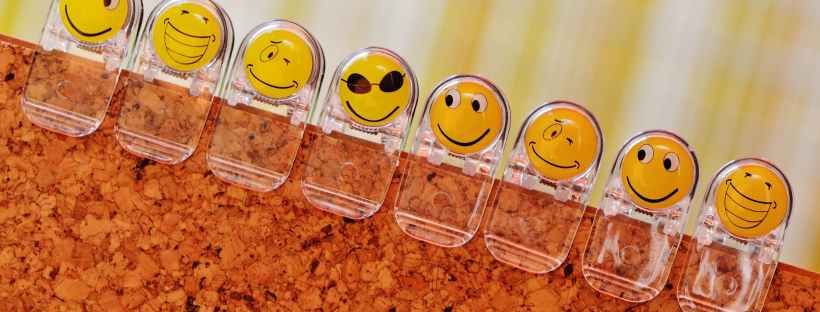
 One of the most iconic symbols of our time is the Smiley Face. It’s been around since the 1960s with many variations, including the ones that people draw after their signatures or the ones in email emoticons to indicate that a statement is meant in a friendly manner. But why is it that so many people know to use Smiley to indicate kindness and friendliness in the written word, yet don’t use their natural smiles in person-to-person contact?

Generations at Work

Much has been written and discussed regarding the generational differences in the workplace, so I thought it might be helpful to identify what have become the names and birth-year spans of the generations of the 20th- 21st Centuries.  Please keep in mind that those born close to the generations before or after their own will often share those respective characteristics, as defined by historians, marketers and various individuals throughout the years.  For example, a Gen Xer born in 1978 might exhibit many qualities of a Gen Yer. (Among experts there are also some variations in the year-spans of each generation.)

A New You for the New Year


Time for a Change

Each new year ushers in hope for renewal, for reinvention, for change. This particular New Year marshals in a sense of urgency beyond the usual determination to get organized, lose weight, exercise more, improve finances, learn a foreign language, take better care of one’s health, stop smoking, study harder, travel more, contribute more time and money to charities and so on.

This year, students and young professionals are more deeply concerned than ever about wrapping up high school successfully and getting into college, graduating from college, paying off student loans, landing that first real job, keeping that job, moving into their own place, getting on the right career path, and advancing on that path or making career changes.